
Lucas seeks big funding boost for Fort Reno
Representative wants $16 million compared to $1 million in previous years
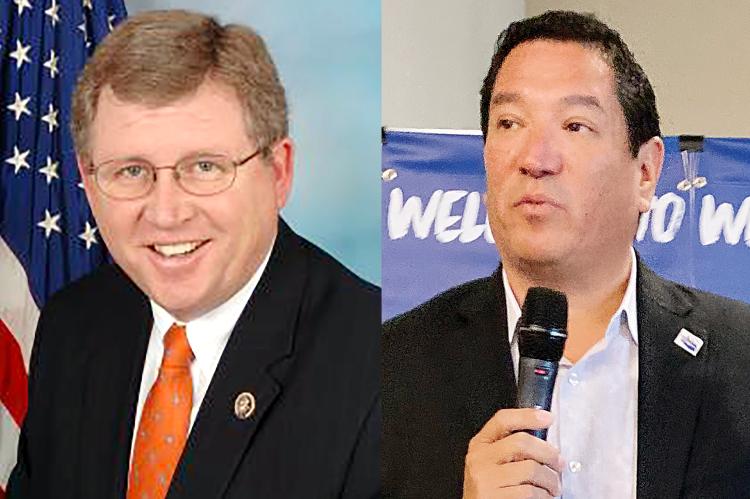
A Native American nation in Oklahoma is incensed that a lawmaker is requesting millions of dollars to fund renovations at the Oklahoma and Central Plains Agricultural Research Center, or OCPARC, more commonly known as Fort Reno.
It’s not that the nation opposes the research, but it sees the funding request as a way to stymie efforts to get its land back from the federal government.
The land near El Reno belongs to the U.S. Department of Agriculture and overlaps with about 10,000 acres of land that the Cheyenne and Arapaho Tribes have been trying to get back for more than 150 years.
Rep. Frank Lucas, the Republican lawmaker making the request to the House Appropriations Committee, has long argued that the tribes have been adequately compensated for the patch of land in his district. The tribes disagree. The C&A point to a 1999 Department of the Interior report that said the tribe was never paid for the land.
Now, the governor of the Cheyenne and Arapaho Tribes says Lucas is doing everything he can to avoid working with them.
Reggie Wassana, governor of the Cheyenne and Arapaho Tribes, said Lucas has been stonewalling the tribes from striking a land deal, and that the ongoing research and proposed renovations are part of a game of keep-away.
“We’ve offered everything and tried to do everything and bend as much as we can, but nothing is ever good enough for him to say, ‘Yeah, let’s work the deal together, we can be partners,’” Wassana said.
Lucas’ office did not respond to requests for comment.
But the lawmaker is requesting $16.6 million for a community project to renovate research facilities at the Oklahoma and Central Plains Agricultural Research Center, a drastic increase from similar projects he requested for the center in 2024 and 2023 for about $1.3 million each. It’s also coming in the context of the Trump administration making broader cuts to research.
“Repairs to these facilities will promote OCPARC into a world-class facility promoting the use of improved plant genetics and water use efficiency, sustainable beef cattle production and safer dams and waterways, benefiting all communities in OK-03 and all communities on the Central Plains,” reads a description of the project on Lucas’ website.
In the past, Lucas has referred to Fort Reno as the “crown jewel” of USDA research centers.
Wassana spoke with Interior Secretary Doug Burgum this year about potentially transferring the land, and the Biden administration told The Hill last year that it was committed to finding a long-term workable solution with the tribes. But any change in ownership is blocked by a provision in the farm bill - legislation that Lucas has led for years - at least until the funding deadline at the end of September.
“Keeping some type of research going, to me, it’s more of a control issue than it is doing what’s right for the general public,” Wassana said.
He said he plans to call federal departments to try to move negotiations forward, given the upcoming government funding deadline.
Wassana said his ideal outcome would be to enter into an agreement with the USDA so the department could continue its research and use of the land, but with the tribes having ownership, being benefactors of the property, its usage and its sustainability.
Wassana also said he hopes the tribes can develop the land one day, including raising cattle, growing crops, drilling for oil and building entertainment, education and manufacturing facilities.
Wassana said he’s also proposed collaborative research efforts to the USDA such as studies on bison, hoping it could lead to more jobs for his tribes, as well as surrounding communities.
The USDA did not respond to a request for comment.
“I just really feel that the best possible use and the best possible stewardship of the property, still hand in hand, would best fit the tribes and the local communities,” Wassana said.
“I believe the local communities also agree that the tribes should receive those lands back.”
Note: This story was produced as part of a partnership between NOTUS and Oklahoma Watch. Em Luetkemeyer is a NOTUS reporter covering the federal government.