

Fort Reno impact could be 3,000 jobs
Wassana: Oil, other revenue would build multi-faceted economic development complex
So what happens if the Cheyenne and Arapaho are successful in finally getting Fort Reno returned to the tribes?
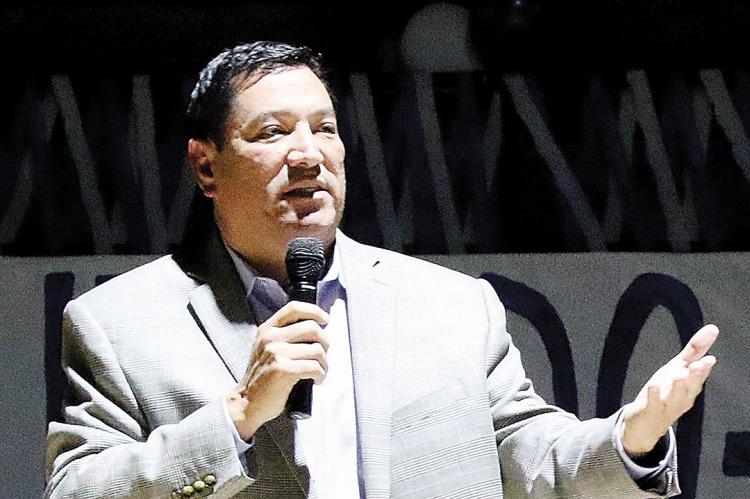
Reggie Wassana has a one-word answer: jobs.
“Someone has to step up and help create an environment that helps build economic opportunity in central and western Oklahoma,” said Wassana, governor of the C&A Tribes. “It can be the Cheyenne and Arapaho Tribes working with the local communities to help build a promising future for the generations to come. We can’t always rely on the oil and gas industry because it fluctuates up and down.
“There has to be more opportunity for everyone.”
Wassana said the key to building that future would get a massive jump-start if the land known as Fort Reno is returned to the C&A. The 9,500 acres in west El Reno is reported to have vast amounts of oil and gas beneath its surface. It’s this resource, along with other financial tools, that could help launch a job-creating machine, Wassana said.
The C&A governor said he has met with investors who would like to partner with the tribes to help build something “quite unique.”
He said the minerals at Fort Reno, combined with private investment and the selling of bonds could lead to a development that would provide “well-paying jobs” and attract people from all over for history, entertainment and education tourism.
The C&A hired a Chicago-based firm that specializes in creating studies related to land development and destination tourist attractions. Hunden Partners says it has conducted more than 1,000 studies over 25 years that have resulted in more than $20 billion in investments.
The firm produced a 31-page document that essentially says if the Fort Reno land is developed in the way the C&A envision, it could create almost 3,000 full-time jobs and generate about $1 billion per year in economic activity. Over a 30-year period, the taxes produced by the development would bring in more than $750 million to local governmental coffers, the study says. Net earnings would top more than $9 billion in that 30-year span.
Wassana sees a development that includes history and entertainment as well as manufacturing and agriculture.
He also sees the research being conducted by the USDA at Fort Reno continuing and even expanding. He proposes the idea of adding bison research to the USDA mission.
“We’ve met with the Secretary of Agriculture and he likes what we’re proposing,” Wassana said.
He said the tribes will seek support from communities in the area because “this is something that will help not only the Cheyenne and Arapaho people, but also communities like El Reno, Yukon and Calumet, especially El Reno,” he said.
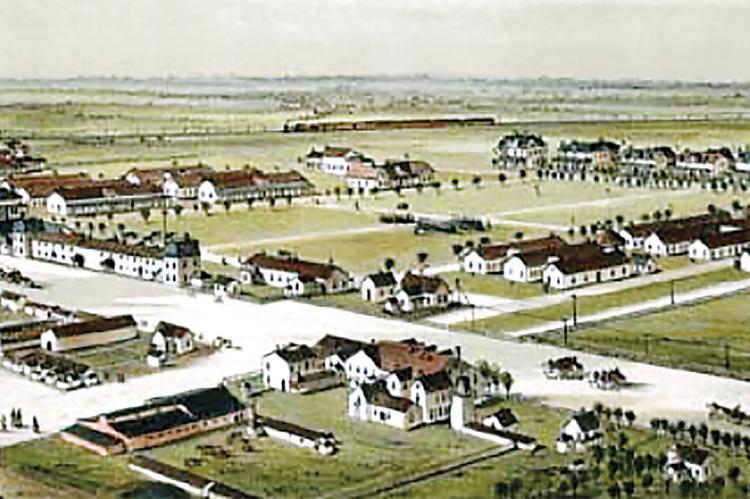
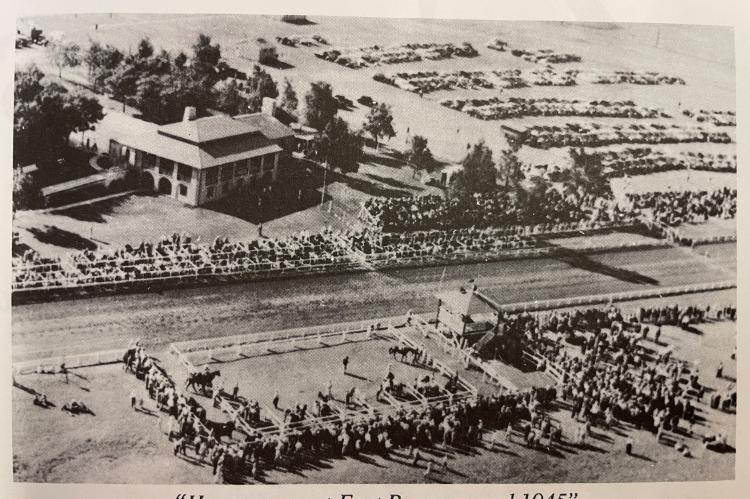
The C&A have argued for well over 100 years that the 9,500 acres in west El Reno belong to the tribes. The USDA has been in control of the property since the federal government transferred it from military use in 1948.
An opinion in 1999 from the Interior Department agreed the tribes have a credible claim to the property.
Wassana said it’s the billions of dollars in minerals believed to rest below the surface of Fort Reno that has kept the land from being returned to the tribes. He said the C&A would use those same minerals to build a massive job-creating environment.
“Change is happening and I believe the changes we will see in the next 15 to 20 years will be even more dramatic than what we’ve experienced so far,” Wassana said.
Wassana said the tribes produced the study to show Oklahoma how dramatic the economic impact could be if the land is returned to the C&A. He said the development would create jobs for the entire community and lead to a domino effect, attracting more businesses to the area.
“It is the intent of the developer/owner to engage a formal RFP process for the selection of a qualified management company for the theme park in El Reno. Those to be considered, albeit not the complete list, would include OVG 360, ASM Global, SFC and VenuWorks,” said the report created by Hunden.
Hunden said it uses the IMPLAN input-output multiplier model, which determines the level of additional activity in the El Reno economy due to additional inputs.
For example, for every dollar of direct new spending in El Reno, the model provides multipliers for the indirect and induced spending that will result.
The results are called “dramatic” by Wassana.
The study says: “The Project would add game-changing additional offerings to the El Reno area, generating new visitors and spending to the local economy.
“Over 30 years direct spending totals $16.2 billion. This direct spending leads to indirect and induced spending locally. Over 30 years spending in the local economy is expected to total nearly $27.4 billion. Jobs will be supported both onsite and offsite from this direct, indirect and induced spending.
“Over 30 years the Project is expected to generate $9.6 billion in net new earnings, supporting an average of 2,950 ongoing, full-time equivalent jobs.”
Under the assumptions made by Hunden, over 30 years the Project is expected to generate $780.8 million in net new taxes locally.
These taxes are all net new, meaning but for the Project, these taxes would not be generated.
Hunden Partners said it performed “a high-level assessment of comparable developments” to guide the economic impact projections for the proposed development at Fort Reno.
“There are few, if any, developments that are directly comparable that comprise all of the planned use types within the Project. Thus, Hunden categorized each use type and assessed the sizing, visitation and high-level spending metrics, as available, for several different developments across the country.”
Also part of the study was the development of the C&A property at Country Club and I-40. The tribes own more than 150 acres at the site.
The study examined the impact of a 6,000-seat, all-purpose arena as well as a hotel and casino. Overall, the investment in both Fort Reno and I-40 and Country Club would be close to $2 billion.
Wassana said this type of development would not happen overnight, but with planning and cooperation with the local community.
“We have to work hand-in-hand,” Wassana said.
He said local support for the return of Fort Reno is vital.
Wassana said Congressman Frank Lucas told him in the early 1990s when he was first running for Congress and Wassana was working in tribal administration that if the C&A got support from the local community, he would work to help return the land to the tribes.
Webmaster’s note: To view the Hunden Partners report concerning the C&A proposal for Fort Reno, click here.