
Wassana talks Fort Reno with Trump administration
C&A Governor spoke with Interior Secretary about regaining lands
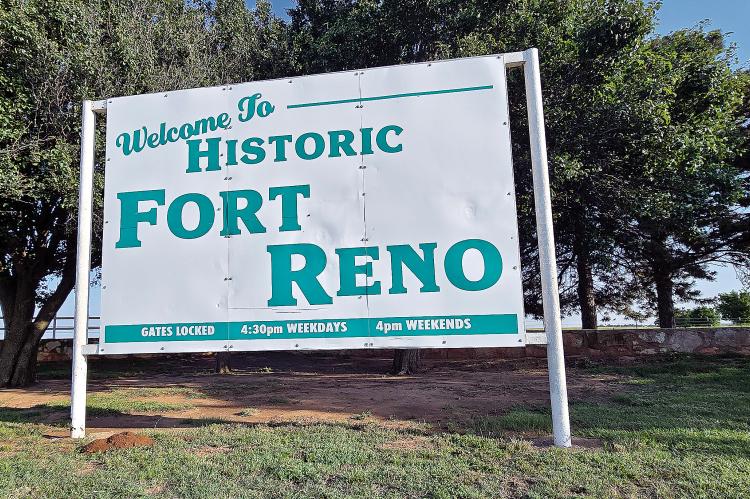
The Cheyenne and Arapaho Tribes, a Native American nation in Oklahoma, is trying to negotiate with the Trump administration to see if it can help win back a piece of land that was taken over by the federal government more than 150 years ago.
The nearly 10,000-acre patch of land located near El Reno has been under federal government control since the 1800s and was once used for military purposes.
It is now home to a Department of Agriculture center whose research includes forage, hydraulics and livestock. But for decades, the federally recognized Cheyenne and Arapaho Tribes have fought for the land to be transferred back to them.
The nation may be gaining ground with one of President Donald Trump’s cabinet members: Interior Secretary Doug Burgum.
“Burgum did say it was going to be one of his priorities to investigate on whether those lands can be returned,” said Reggie Wassana, governor of the Cheyenne and Arapaho Tribes.
In early May, Wassana and other tribal leaders met with Burgum, who had a reputation of working with the tribes on issues like public safety, education and tribal representation in his home state of North Dakota.
The Department of the Interior declined to comment on the meeting.
“Out of respect for the significance and oftentimes confidentiality of these discussions, the Department does not have a statement to offer on meetings between the Secretary and Tribal Nations at this time,” J. Elizabeth Peace, a spokesperson at the department, sent in an email.
The White House did not respond to requests for comment.
But Wassana said he hopes Burgum can discuss the issue with President Donald Trump.
“If the president wants to actually cut expenses in the federal government, if he wants to try to give people the opportunity to govern themselves, the best situation to be in for both the tribes and federal government is to return some of the property and let the tribes create their own revenue and their own ability to assist their tribal members,” Wassana said.
He added that the land could create job opportunities.
In recent years, the tribes have succeeded in expanding their land under trust status. But this particular piece of land has remained elusive.
Wassana is hoping that more progress to return it to the tribes can be made under the Trump administration. Trump in his presidential campaign said he would strengthen tribal sovereignty and improve economic development for Native American tribes.
The Biden administration considered transferring the land back to the tribes. Biden’s USDA told The Hill that any transfer of land would be complicated, but it was “committed to finding a long-term workable solution.”
Ultimately, it didn’t happen because of a long-standing provision in the farm bill, which has been spearheaded for years by Oklahoma Rep. Frank Lucas, who represents the district the land is in. The Oklahoma and Central Plains Agricultural Research Center that’s on the land does “fundamental research,” Lucas said.
“And it is 6,500 acres of virgin grasslands, something we don’t have much of in western Oklahoma,” Lucas said.
Any transfer of the land is blocked by Congress through at least September. A USDA spokesperson said in an email that the land is unavailable for transfer.
“Due to limitations set by Congress in statute, this land cannot currently be declared as excess,” the spokesperson said.
Lucas has long argued the tribes have already been compensated for this piece of land, though the tribes, and Wassana specifically, disagree.
“They were compensated in the 1890s, and they were compensated in 1964,” Lucas said.
“Being paid twice seems like a reasonable deal to me.”
The tribes contend the land was not part of the earlier deal as it was set aside for use as a military installation.
Since the military no longer uses it, the tribes contend it should be returned.
The U.S. Appellate Court for the District of Columbia agreed in a 2009 decision.
“We do not reach the court’s alternative conclusion that the 1965 settlement of the Tribes’ ICC suit also bars their present action,” the court order wrote.
Timeline for Historic Fort Reno
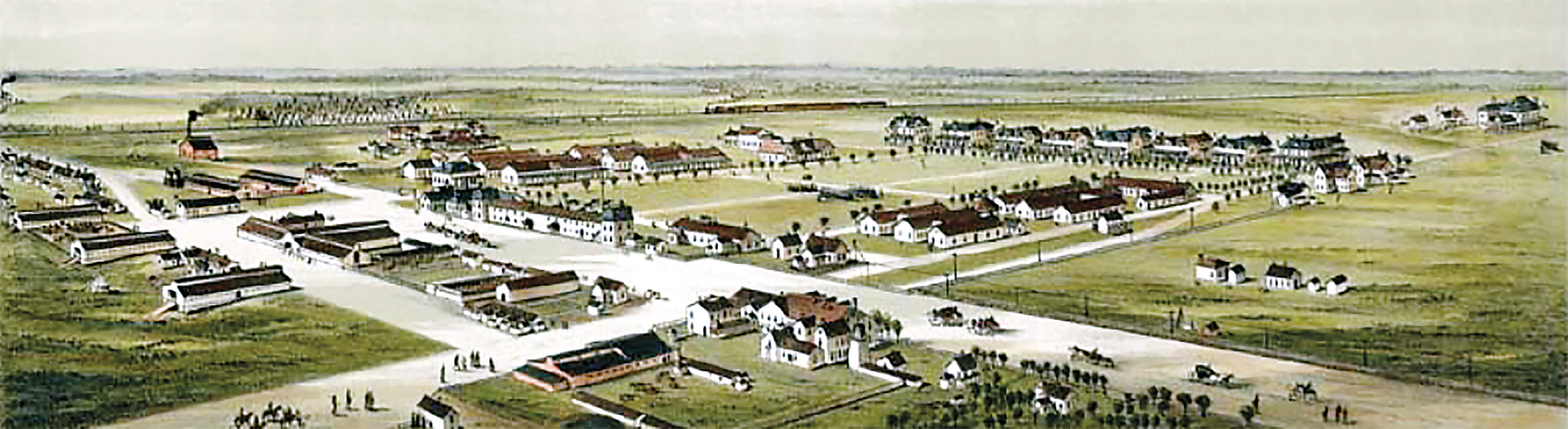
This photo shows the old layout of Fort Reno. (Courtesy photo)
This is a brief submitted by the C&A to the U.S. Department of the Interior. The Tribes contend it supports President Trump’s energy policies by restoring Fort Reno to the Cheyenne and Arapaho Tribes of Oklahoma.
Introduction
The Cheyenne and Arapaho Tribes of Oklahoma seek the rightful return of the historic Fort Reno lands, totaling approximately 9,600 acres, as an act of justice and adherence to the federal government’s trust responsibilities to Native American tribes and furthering the Trump administration’s energy policies.
The history of Fort Reno underscores a legacy of broken promises and failure to compensate the Tribes for lands unjustly taken, despite legislative and judicial actions meant to resolve such grievances. Recently, on December 20, 2024, Congress took the right to make these decisions away from President Trump through the Funding Bill - specifically Provision 7502 of the Farm Bill - which was included in the bill which went from 1,600 pages to 116.
We respectfully urge the Department of the Interior to fulfill its moral and legal obligations by facilitating the transfer of Fort Reno back to the Cheyenne and Arapaho Tribes and further the energy agenda of the Trump administration.
Historical Background
1869 - Reservation Establishment: The Cheyenne and Arapaho Tribes were granted a 5.4 million-acre reservation in western Oklahoma by Executive Order, including the area now known as Fort Reno.
1883 - Military Reservation: President Arthur unilaterally carved out 9,600 acres of this reservation to establish Fort Reno for “military purposes exclusively,” with the understanding it would be returned to the Tribes after the military left.
1892 - Land Cession: The Tribes ceded their 1869 reservation subject to their selection of their own allotments and subject to the conditions imposed by the federal government, which prohibited them from selecting their allotments on military lands like Fort Reno. This arrangement effectively excluded Fort Reno from their land base while providing no compensation.
Use and Transfers of Fort Reno
In 1908, the cavalry left Fort Reno, and the Quartermaster Corps repurposed the land for horse and mule training.
In 1937, 1,000 acres in the southeast corner were transferred to the Department of Justice (DOJ) for use as a federal reformatory. The surface of this is no longer in the claim.
In 1963, an additional 1,500 acres in the southwest corner were given to the DOJ for a dairy program for the prison, formally revoking the original 1883 executive order.
1948 USDA Transfer: 8,500 acres of Fort Reno’s jurisdiction was transferred to the USDA, and classified hearings further limited transparancy about its military use.
Legislative Actions
1952 - HR6114 passed the House but failed in the Senate to return Fort Reno to the Tribes.
The 1976 “excess” provision of the Surplus Property Act mandated that surplus federal property should first be offered to Tribes, yet this has not been applied to Fort Reno.
A 2002 rider in the Farm Bill, Section 7502, explicitly prohibited transferring Fort Reno to the Interior Department in trust for the Tribes, continually effective until September 30, 2025.
Judicial and Administrative Findings
The Indian Claims Commission (ICC) was given jurisdiction to settle all claims prior to August 13, 1946. In 1965, the ICC settled all claims to the 5.4 million acre reservation. This did not explicitly include Fort Reno lands because it was still military until 1948, therefore, the ICC had no jurisdiction.
In 1999, the Department of the Interior issued an opinion acknowledging the Tribes had “credible equitable claim.” They were never compensated for Fort Reno because it could not have been included in the claims settlement of 1965.
In 2009, the D.C. Court of Appeals in dismissing the case based on the 12-year statute of limitations, specifically stated, “We do not reach the alternative conclusion that it was included in the 1965 settlement of the Indian Claims Commission,” leaving the issue of compensation outstanding.
Legal and Policy Grounds for Return
Trust Responsibility: The federal government has a fiduciary obligation to protect tribal lands and resources. The historical treatment of the Cheyenne and Arapaho Tribes in relation to Fort Reno constitutes a clear breach of this trust responsibility.
Lack of Compensation: Fort Reno was taken without payment, a fact acknowledged by the Department of the Interior in 1999. The continued retention of these lands violates the principles of equity and justice.
Surplus Property Act of 1976: The Act’s “excess” provision prohibits interagency transfers of surplus federal property without first offering it to the Tribes. This statutory provision has been ignored in the case of Fort Reno.
Furthering Trump’s Energy Policy: Returning Fort Reno would empower the administration to utilize this historic land for economic development and energy security.
Recommendations
To honor the government’s obligations to the Cheyenne and Arapaho Tribes, we urge the Department of the Interior to:
Enforce Executive over Congressional Power: Allow the provisions of the Surplus Property Act 40 USC 523 (b) 2 A to be exercised by the administration.
Reissue the 1999 solicitor opinion recognizing the Tribes had a credible equitable claim. Declassify historical documents related to Fort Reno to provide a full accounting of its use and legal status over time.
Urge Congress to allow 7502 of the 2002 Farm Bill to expire on September 30, 2025. Revoke the 1883 Executive Order with respect to the USDA property.
Declare Fort Reno “excess under the Surplus Property Act” and return it to the Tribes so that energy development can commence.
Proven Energy Reserves
According to a reserve report produced by leading reserve analyst J.P. Dick, the potential reserves under the subject lands are $4.5 to $6 billion.
The Tribes would benefit from between 25 percent to 33 percent of these reserves in royalties revenues to be reinvested into a development fund to develop the properties.
Congressional games that stymie the administration energy policy: Along with the continual prohibition of the application 40 USC 523 (b) 2 A, via 7502 of the Farm Bill, and most recently via the funding bill of 12/20/24, Congress has further proposed the provision 7502 be made permanent in the upcoming farm bill.
Recently, Congress approved $1.2 million in climate cattle greenhouse research funding to further keep the property utilized and away from the Tribes. Perhaps most disturbing, Congress proposed a $45 million a year provision in the recent weather bill under the Science and Technology Committee. This bill proposed a continual climate hub research project on the property to utilize the oil and gas reserve and spend it on climate/weather research.
Conclusion
The return of Fort Reno to the Cheyenne and Arapaho Tribes is not only a matter of legal and historical accountability but also a step toward promoting the administration’s energy policy.
Further, by restoring this historic land to the Tribes, the Department of the Interior can reaffirm its commitment to its Trust responsibility justice and the principles of tribal self-determination. We respectfully request the Department’s immediate attention to this matter and stand ready to work collaboratively to achieve a resolution.
Fort Reno Timeline
This timeline outlines the history and developments involving the Fort Reno lands and the Cheyenne and Arapaho Tribes of Oklahoma.
1869: A 5.4 million-acre reservation was established for the Cheyenne and Arapaho Tribes in western Oklahoma.
1883: A 9,600-acre portion of this reservation was carved out to establish Fort Reno for exclusive military use.
1892: The Cheyenne and Arapaho Tribes ceded the 1869 reservation, subject to allotments and specific conditions, including a prohibition on selecting military land for allotment.
1908: The cavalry left Fort Reno, and the Quartermaster Corps took over to use the facility for mule training.
1937: A 1,000-acre portion in the southeast corner of Fort Reno was transferred to the Department of Justice (DOJ) for use as a reformatory.
1946: The Indian Claims Commission (ICC) was created to address land claims predating its establishment.
1948: Jurisdiction of Fort Reno was transferred to the USDA. Hearings were held, and military documents related to the land were classified and put on standby status.
1958: The Cheyenne and Arapaho Tribes filed a severed petition with the ICC requesting the return of Fort Reno based on equitable powers.
1963: A 1,500-acre portion in the southwest corner of Fort Reno was transferred to the DOJ for a dairy program via an executive order. This revoked the 1883 executive order that had reserved the land for military use.
1965: All ICC claims related to the 1869 reservation were settled.
1976: The "excess" provision of the Surplus Property Act was passed, mandating that surplus federal property should first be offered to tribes in Oklahoma rather than being transferred between federal agencies.
1980s: Leases for the Fort Reno property were proposed but later revoked.
1997: Baboons were placed at Fort Reno as part of a USDA program to justify the continued federal use of the land.
1999: The Department of the Interior issued an opinion stating that the Tribes were never compensated for the Fort Reno land.
2002: A rider in the Farm Bill prohibited the transfer of Fort Reno lands to the Department of the Interior in trust for the Tribes.
2009: The D.C. Court of Appeals ruled that it would not reach a conclusion on whether the Fort Reno lands were included in the 1965 ICC settlement.
Key Themes:
The land has repeatedly shifted hands between federal agencies.
Despite claims, the Tribes were never compensated for Fort Reno. The Tribes were paid $3 and change per acre for the 5 million acres they were given as a reservation. Fort Reno was not part of that deal. It had been segregated for military purposes and was to return to the C&A after the military left. That did not happen.
Legislative and judicial actions have complicated tribal efforts to reclaim the land.