

Seeking property tax reform, Paxton pans immature elimination proposal
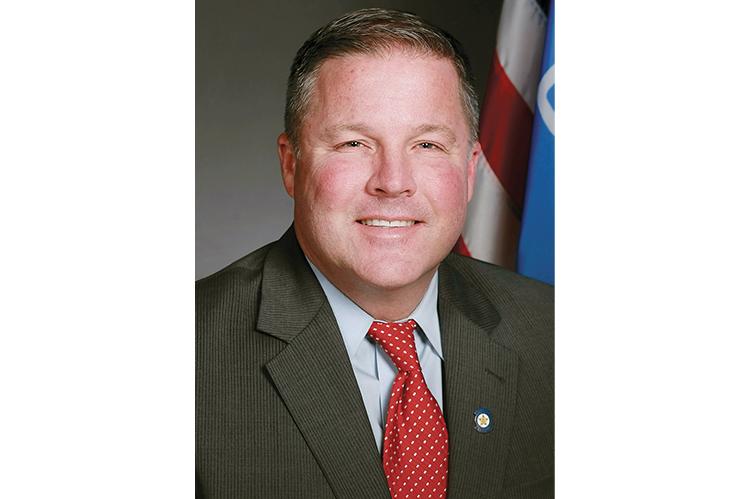
With a variety of rising costs frustrating Oklahoma homeowners, legislative leaders are weighing options for property tax reforms to head off a proposed state question that would exempt homestead properties entirely, dramatically reduce local collections and force local and county governments to shrink their services.
In the shadow of an initiative petition proposing State Question 843 — which would phase out property taxes on principle residences — more than 60 bills have been filed to tweak, cap or otherwise reform Oklahoma’s property rules.
The legislative proposals range from outright elimination — either across the state or only on homestead residences — to targeted relief, such as increasing the homestead exemption for seniors or capping the maximum rate of increases.
While Republican lawmakers across the board are largely signaling a desire to address the topic, exactly what type of reform would work best is pitting hardline conservatives, who favor property tax elimination — against the party’s more fiscally cautious legislators, who say removing properties from rolls altogether would blow holes in local government budgets.
“The author of that state question knew that there were already senators working all summer long on property tax reform,” Senate President Pro Tempore Lonnie Paxton (R-Tuttle) said Feb. 5.
“Because we were hearing from constituents (that) the cost of home ownership — whether it be through property taxes or just insurance cost — was just going up a lot, it is something people are feeling. I feel it. Everybody feels that. So there is your populist jumping in and saying, ‘I’ve got the solution. We will just eliminate property taxes.’ It is very immature. It is very inconsistent with good government.”
Paxton appeared to be referencing Sen. Shane Jett (R-Shawnee), one of three SQ 843 proponents and the chairman of the Oklahoma Freedom Caucus, a state-level affiliate of a national movement aimed at pushing the Republican party toward more conservative policies.
While the caucus does not publicly name all of its members, it has at least 11 publicly known members in Oklahoma, nine of whom serve in the Senate. Jett has said the caucus has more members, but some choose to keep their membership private.
Jett seemed indifferent to Paxton’s push-back during an interview.
“My concern and my primary responsibility, when I was elected to Senate District 17, was to represent the taxpayer, and that is my focus,” Jett said.
“Those who would like to use taxpayer dollars for their own budgets, quite frankly, need to find that revenue elsewhere. They should not be extracting it from the equity that we have accumulated in our homes.”
Although the legislation session only started Feb. 2, Jett and Paxton have already engaged in a public tiff unrelated to property taxes.
Instead, Jett’s allegation that some of his colleagues were drunk on the Senate floor during the final night of the 2025 session has pitted him against Paxton, who chose to call Jett’s claim “baseless” despite broad knowledge around the Capitol that several legislators were drinking as a vote stayed open for five hours.
In an email to Republican senators, Paxton said Jett was “hell-bent on dividing this caucus,” and his criticism has only fermented further on the topic of property taxes.
“That is a horrible state question, very poorly thought out,” Paxton said. “The author of that state question simply is trying to draw attention to himself despite what it would do to the state.”
Despite the infighting, public sentiment and early pressure are hard to ignore as the stage is being set for some form of relief.
“I think the citizens have spoken. I think that they want to see some change, and I think the Legislature will address that in some form or capacity this session,” Senate Appropriations and Budget Committee Chairman Chuck Hall (R-Perry) said at a State Chamber of Oklahoma Press Conference on Jan. 21.
Paxton said that, if he gets his way this session, some sort of property tax reform will appear on an Oklahoma ballot in 2026.
“They will have an option sometime this year to vote on some property tax reform,” Paxton said. “But we will (…) pull in schools and the counties and say, ‘Here is what we are thinking about doing. How would this affect you?’”
To kick off the 2026 session during his final State of the State address, Gov. Kevin Stitt referenced public frustration about the cost of living.
Stitt is term-limited, and in the race to replace him this election cycle, Republican candidates Mike Mazzei, Jake Merrick and Charles McCall have already weighed in on property taxes. Mazzei, a former state senator, wants to eliminate property taxes on homes, suggesting a phased rollout to limit disruption.
McCall recently tweeted that he would “freeze property taxes for all Oklahomans, 62 and older on their homestead.”
Merrick has posted about Oklahoma having created “an entire system on an unjust tax.”
Asked about property taxes Feb. 9 after he spoke to the Senate Republican Caucus, Stitt said “a total elimination would not be reasonable,” and he suggested such proposals are “just kind of talking points.”
“But a freeze, like I said in my State of the State, would be reasonable,” Stitt said. “Or maybe an overall cap in collections in a county that can only go up 3 percent per year. But if you are developing and building, then there is a distribution back to the homeowner. So the big purpose here is to try to hold property taxes down and not have automatic 3 to 5 percent escalations on seniors, working families and people just trying to make ends meet.”
Rep. Jay Steagall (R-Yukon) is among the three proponents of the SQ 843 initiative petition, for which signatures are not yet being collected. While Steagall applauded the governor for acknowledging a need for property tax relief, he said simply capping or freezing tax rates would not be enough.
“What we are hearing more and more from our constituents is that it is not really a freeze that they are after,” Steagall said.
“They are after the elimination of property taxes.”
Likewise, Jett said Oklahoma’s property tax system needs to be reformed and eliminated for homeowners across the board, not just for certain groups like seniors or military veterans.
“Whenever we start piece-mealing the relief and we carve out a group that is more special than other groups, those more special groups tend to go on with their lives, raising kids, investing and putting money in the bank,” Jett said. “They forget that the other part of the population is not part of the privileged group.”
While many Republican lawmakers appear on board with some form of property tax relief, they remain steadfast in their concerns about reducing the revenue generated for local governments by property taxes, which are referred to as “ad valorem” taxes in Oklahoma.
“Do we need some reform? We will all agree on that, and I think there’s a lot of reform bills,” said House Common Education Committee Chairman Dick Lowe (R-Amber).
“When you are going to take away revenue, you need to look at what you are going to replace it with, because we still want education. We still want our tech centers. We still have value in all of our county officers. And so I think — I hope — people will look at it in reality.”